The One-Detail Look: Staying with an Artwork for Five Minutes
The one-detail look helps you build a small, memorable record of an artwork, making it easier to revisit the piece and share what stayed with you.
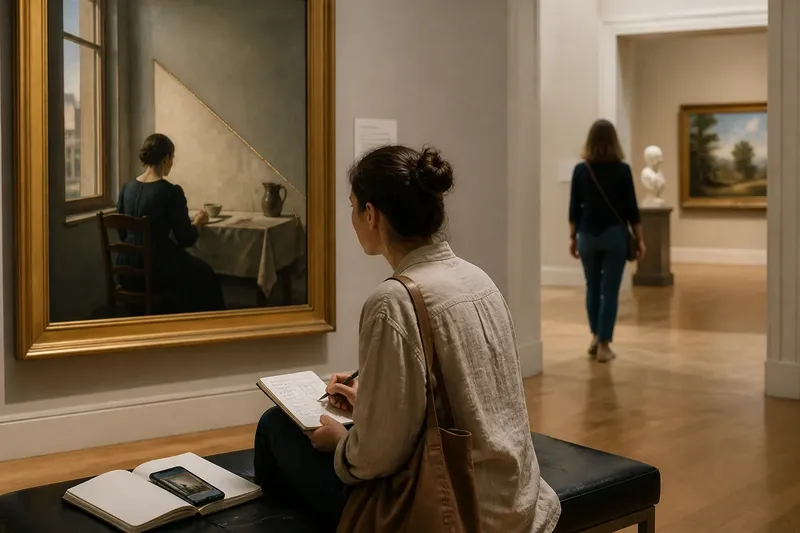
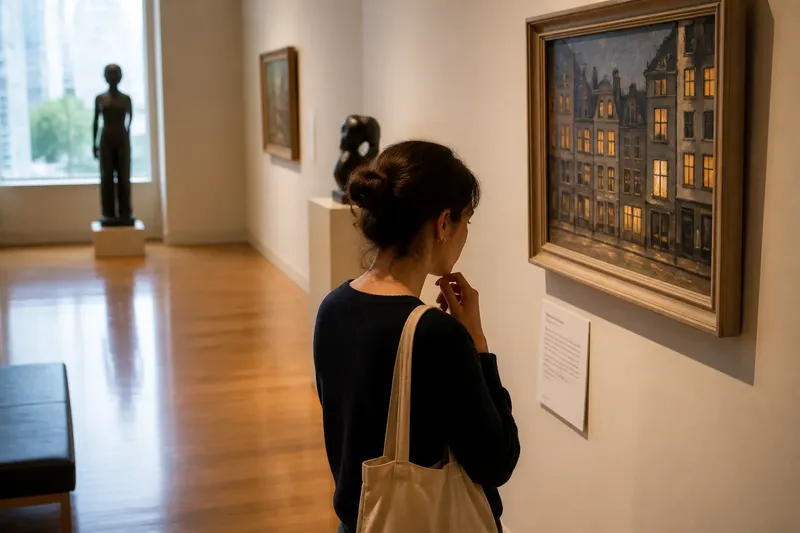
At a museum, you pause beside a painting while a friend moves on to the next room. You want to remember more than its general mood, so you choose one visible detail and let it become a bookmark for a future visit. The one-detail look is a five-minute practice for keeping, revisiting, and sharing a personal connection with art.
Instead of trying to interpret the whole work, use the detail to make a small record: what caught your eye, where it sits, and what you might want to notice again. That record can be a sentence in a notebook, a note in your phone, or a sketch. The aim is not a complete reading of the artwork, but a reliable way back to it.
Choose a detail you can remember later
Pick a distinct feature that is easy to describe: a red thread crossing a sleeve, a chipped-looking shape in a painted wall, a gap between two figures, or a curve along the rim of a bowl. A feature does not need to seem important to the artist. It only needs to give you a concrete starting point for your own return.
Notice its location as well as its appearance. “The narrow green line near the lower-left corner” is easier to find again than “the green part,” especially if you are writing the note after you leave the gallery. If the artwork has no clear corners, describe the detail in relation to something nearby, such as “the shadow just beneath the raised hand.”
Before the five minutes end, choose one small trace to keep. You might write a sentence, make a rough diagram, or save the museum’s permitted image alongside your note. Follow the venue’s photography rules and avoid touching or marking the artwork.
Make a note that can bring the artwork back
A useful art note holds two things together: a locator and a personal response. The locator helps you find the detail; the response says why it stayed with you. Keep the wording specific enough that you can recognize the feature later, but leave room for your impression to change.
For example, a note could say, “The thin gold line runs from the window to the edge of the table; it made the room feel connected.” The first part points to visible information, while the second records your response rather than claiming what the artist intended. A notes app, pocket notebook, or voice memo can all work.
Imagine you are looking at a print with a small orange circle near the top. You spend a few minutes following how its color differs from the surrounding gray, then write, “Orange circle above the doorway; I want to see whether it still feels separate when I return.” Later, you reopen the note and look for that circle. The result is a clear route back to the work, along with a question your next visit can answer.
Use the detail as a bookmark, not a verdict
A note made during one visit captures one moment of looking. It does not need to settle what the work means, and it should not become a rule for what you must notice next time. You may return to the same detail and feel differently, or discover that a nearby feature now seems more compelling.
When you revisit the artwork, read your note before looking for the detail. Then check whether the feature is where you remember it and whether your response has shifted. Add a brief second sentence rather than replacing the first; keeping both makes the change in your relationship to the work visible.
If you are looking at art at home, keep the note beside a book, exhibition leaflet, or saved image. For an artwork in a public collection, record the artist and title if they are available so the note can be found again. These small details help turn a passing encounter into part of a personal record of art.
Share the detail without explaining the whole work
A precise detail can make a conversation about art easier to begin. Tell someone what you noticed and what it did for you, then leave space for their response. “I keep noticing the empty space beside the chair” invites another person to look; “this definitely means someone has left” closes down possibilities the image may not settle.
If you share a photograph or a written note online, check the source and any image-use rules before posting. You can also share the locator and your response without reproducing the artwork. A short description often gives another person enough to understand what caught your attention.
- If your note names only a color, add where it appears; if you cannot locate it later, describe its nearest shape or edge instead.
- If your description states an interpretation as fact, mark it as your impression; if the evidence feels uncertain, return to what is plainly visible.
- If you plan to share an image, check the venue’s photography rules; if sharing is not allowed, share your written observation instead.
- If you want to revisit the work, include the artist and title when available; if either is unknown, note the museum, book, or collection where you saw it.
- If your note feels too long to reread, keep one locator and one response; if an important question remains, add it as a separate sentence.
- If your impression changes on return, preserve the earlier note; if you are unsure what changed, compare the two descriptions side by side.
What should you record and revisit?
Should the note describe only what I see?
Include a clear description and, if useful, a personal response. Keeping those parts distinct lets you remember both the visible detail and the feeling or question it prompted.
What if I cannot remember the artist or title?
Record the place where you saw the work and any details available on a gallery label or exhibition leaflet. If you can safely and appropriately do so, note a nearby room or collection name to help you locate it later.
Can I use this practice with art at home?
Yes. A book, a postcard, or a saved image can give you a detail to return to, and a notebook or notes app can hold your record. If the image belongs to someone else, follow the relevant sharing and use terms before posting it.
What if my response changes when I revisit?
Keep the original note and add what feels different now. A changed response is part of the record, not evidence that your first impression was wrong.
Carry one clear starting point forward
Before you leave the artwork, make sure your note would help you find the detail again: name its color or shape, place it in relation to something nearby, and preserve the response that made it worth keeping. The one-detail look works best as a modest bookmark for art—one that makes revisiting easier without deciding in advance what you are supposed to see.