Sketchbook or Loose Sheets? Choosing a Surface for an Unplanned Drawing Habit
Choose a sketchbook or loose sheets for an unplanned drawing habit by matching portability, page freedom, and easy ways to revisit earlier work.
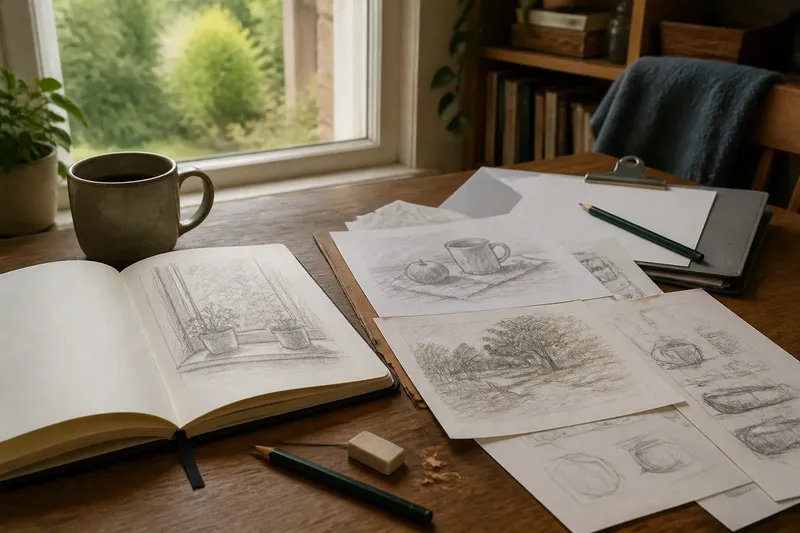
Your pencil is beside the mug, a scrap of paper is on the counter, and you have a few quiet minutes before leaving. For an unplanned drawing habit, the first choice is not what to draw but where the drawing will live: in a bound sketchbook or on loose sheets. Each format can make starting easier, but they support different kinds of everyday use.
Start with the moment you are likely to draw
Think of a typical opening rather than an ideal studio session. You might sketch while waiting at a café, keep a pad beside the sofa, or draw at a desk after putting away the day’s work. The surface that fits the actual place and available time is more useful than one chosen for an imagined routine.
A sketchbook gathers pages in one object. It can be ready on a shelf or slipped into a bag, and turning to the next blank page involves little setup. Loose paper takes more deciding: which sheet, where to put it, and how to keep it from drifting away. That extra choice may be welcome if you like selecting a particular paper, but it can make a brief drawing moment feel like a small project.
Before choosing, notice what tends to interrupt you. If supplies get scattered, a bound book may be easier to pick up and put away. If you often want to try a different size or work beside a reference, loose sheets may suit your habits better.
Compare how each surface travels
A sketchbook is a compact kit when paired with a pencil and a small eraser. The covers protect the pages, while the binding keeps the paper together in a tote or backpack. Its size is fixed, though, and a book that feels comfortable at home may be awkward in a small bag or on a crowded table.
Loose sheets can be cut or selected to suit a particular place. A few sheets can fit into a folder, clipboard, or stiff envelope, while a larger sheet can offer room for a broad, open mark. Their flexibility comes with a need for protection: a portfolio, folder, or hard backing can prevent folded corners and stray marks from other objects.
Consider not only carrying the paper but also carrying a drawing in progress. A sketchbook lets you close the covers and continue later without separating the work from its neighbors. With loose paper, a clipboard holds a page during drawing, and a labeled folder can keep it safe afterward. Choose the arrangement you will actually return to, not one that requires a special setup each time.
Decide whether page order helps or gets in the way
The binding of a sketchbook creates a sequence. That can be reassuring: the next blank page is already there, and earlier drawings remain nearby. It can also make a page feel consequential. If you hesitate because the first mark will sit permanently beside the next one, a book with a less precious feel—or loose sheets that can be selected freely—may help.
Loose sheets offer more freedom to rearrange. You can group drawings by subject, place a few side by side, or keep a promising page apart from practice marks. But that freedom shifts the organizing decision to later. A stack can lose its order, and a drawing without a date or note may be harder to connect to the circumstances in which it was made.
Say you often draw small views from the kitchen window and sometimes sketch objects on the table. Imagine keeping the window drawings in a pocket sketchbook, then using loose sheets for the table studies when you want to compare several arrangements. The observable result would be a regular home for quick pages and a separate, movable set for drawings that benefit from being grouped. You could begin with that simple split and adjust it if one format starts gathering dust.
Make earlier drawings easy to find
Returning to old work means being able to locate it without turning the search into a chore. In a sketchbook, the pages stay together, so a quick flip can bring back a remembered drawing or reveal a change in what catches your eye. A date or a short subject note in the margin can make that search more direct without turning each page into a diary entry.
Loose sheets are easier to sort by subject, place, or drawing session. A folder with labeled dividers can hold separate groups, and a simple pencil note on the back can preserve a useful clue. Keep the system modest: if every sheet needs a detailed record, the filing may become harder to sustain than the drawing itself.
Another difference is what you can see at once. A bound book encourages you to revisit pages in sequence, while loose drawings can be laid out together on a table or pinned to a board. The first can help you notice how your attention moves from page to page; the second makes comparison and rearrangement easier. Pick the kind of return you enjoy, since revisiting should feel like part of the practice rather than an administrative task.
Choose paper for the marks you want to make
For a habit built around pencil, colored pencil, or a fine pen, many ordinary sketchbook papers and loose drawing papers can be comfortable starting points. The feel of the page matters: a smooth surface supports clean, crisp lines, while more texture gives a pencil mark a different character. If you already have a preferred tool, bring it when comparing paper or try it on a spare page.
Loose sheets make it easier to choose different papers for different purposes. You might keep smooth paper for pen drawings and a more textured sheet for soft pencil shading. A sketchbook offers a consistent surface from page to page, which can reduce decisions and make it simpler to pick up the same drawing tools each time.
For wet media or unusual materials, check the paper label and the manufacturer’s instructions before choosing. Paper and binding vary, so suitability depends on the particular product. If your drawing habit is mostly dry media, do not let the search for an all-purpose surface delay a simple start.
Which drawing surface fits your habit?
Is a sketchbook better for drawing on the go?
A sketchbook is often convenient when you want one protected object with pages ready to use. Loose sheets can travel well too if a folder or portfolio keeps them flat, but they ask you to manage a few separate pieces.
Are loose sheets easier to rearrange than sketchbook pages?
Yes, loose sheets can be sorted, grouped, displayed, or moved without changing the order of other drawings. A bound book keeps a stable sequence, which is useful if you prefer to browse work in the order you made it.
Which format makes old drawings easier to revisit?
A sketchbook keeps old work together, while a folder system makes it possible to search loose pages by category. The easier option is the one whose storage you can maintain with little effort; brief dates or subject notes can help either format.
Can I use both a sketchbook and loose paper?
Yes. A small book can serve for quick, portable drawings, with loose sheets reserved for work that needs a different size or that you may want to rearrange. Keep each format’s purpose clear enough that you can choose without pausing to reconsider the whole system.
Set up a small practice you can repeat
Choose one surface, one drawing tool, and a place where the materials can stay within reach. A pocket-sized sketchbook and a pencil might live in a bag; loose sheets, a clipboard, and a folder might stay near a desk. Make the setup match the place where an unplanned drawing habit is most likely to begin.
Give the first session a modest prompt that does not require preparation: draw the cup by the sink, a folded towel, or the view from your chair. If you are using loose sheets, put the finished page in its folder before moving on. If you are using a sketchbook, leave it open to the next blank page only if that makes returning feel inviting.
After a few occasions, notice what happens at the moment you reach for the paper. Do you like turning to a ready page, or do you want to choose a sheet and shift it around? Are earlier drawings easy to find, and does carrying the materials feel natural? Let those observations guide a small adjustment, such as changing the folder location or trying a different book size.
The right sketchbook or loose sheets are the ones that make the next drawing easy to begin and the previous one easy to find. Start with the format that fits your ordinary setting, then let the way you use it—not an idealized drawing routine—tell you what to keep.