A Shared Table for a Small Art-and-Making Afternoon
A shared table for an art-and-making afternoon can make looking and responding feel easy, with a clear invitation, simple room setup, and no pressure to finish.
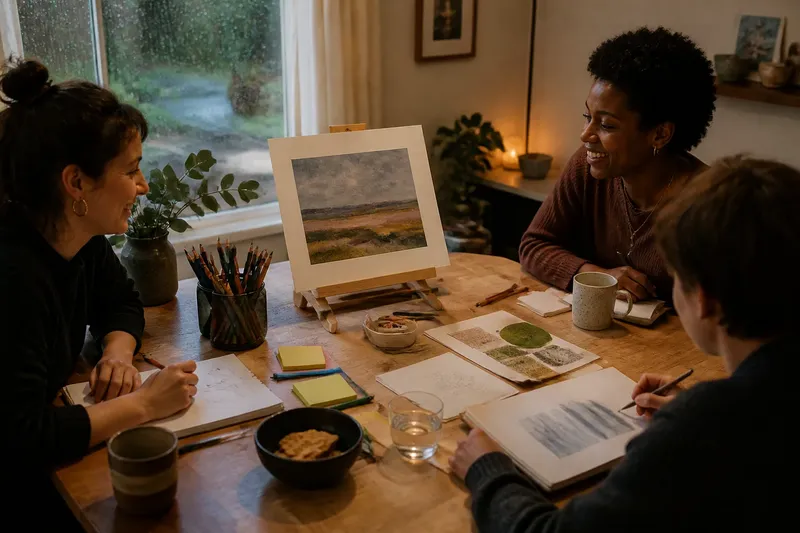
On a rainy Saturday, a friend arrives with a coat over one arm and pauses at the kitchen table, where a small print, paper, and colored pencils are already waiting. A shared table for an art-and-making afternoon gives people an easy place to gather around one artwork, then respond at their own pace. The point is not to leave with a polished object; it is to make room for attentive looking and a little company.
Choose one artwork that can hold several kinds of attention
A single work gives the gathering a common starting point without deciding what anyone must think. Choose something you can show clearly: a postcard, a small reproduction, a drawing, a textile sample, or an image on a tablet. If the original is fragile or valuable, keep it somewhere safe and use a reproduction instead.
Look for details that invite more than one response. A busy pattern might suggest tracing shapes, while a quiet landscape could lead to a few lines about weather or distance. The work does not need an obvious story; varied colors, textures, edges, and marks offer plenty to notice.
Keep the artwork visible without making it feel like a display under inspection. Place a print on a book stand or lean it against a wall, and let people move closer when they want. If everyone needs to see the same image, pass it around before the activity rather than asking guests to crowd around one phone.
Make the invitation clear about the pace and the permission to pause
A useful invitation explains the basic shape of the afternoon: guests will spend time with one artwork, try a simple response activity, and share only if they feel like it. That description helps people decide whether the gathering suits them. It also prevents the word “workshop” from implying a class, a skill test, or a finished project.
Say what materials will be available and whether guests should bring anything. “I’ll have paper and pencils; bring a favorite pen if you like” is more reassuring than a vague request to bring art supplies. Mention any practical details that affect comfort, such as a low-key start time or whether people can arrive late.
Imagine you invite three neighbors who have different levels of experience drawing. You explain that the activity is to make a small response to one print, that no one has to show their page, and that ordinary pens and paper will be ready. They can then arrive expecting a social afternoon rather than an art lesson.
Arrange the room so the artwork and materials are easy to reach
Use a table large enough for people to set down a cup and work without guarding a narrow patch of space. Leave the artwork where it can be seen from several seats, and put materials in the middle or on a nearby side table. A clear surface is more welcoming than a carefully staged spread of supplies.
Keep the material choices modest. Plain paper, pencils, a few colored pencils, and sticky notes can support many kinds of response. If you add paint, clay, or glue, consider the cleanup and the table covering; the activity should not turn into a scramble to protect the room.
Set out water and snacks away from the artwork and working pages. Cups near wet materials or an open book invite spills, and food on the central work area can make people hesitate to use it. A separate counter or small tray is enough to keep refreshments available without competing for table space.
- Leave a clear place for each person to put a page and a drink.
- Put extra pencils and paper within easy reach rather than handing out a fixed kit.
- Keep a wastebasket nearby for pencil shavings, scraps, and wrappers.
- Use a lamp or choose a naturally bright spot where colors and marks are visible.
- Leave a few seats open or let guests know they can work from the sofa or floor.
Offer a response activity with more than one right way to begin
A good prompt narrows the starting point but leaves the response open. Invite guests to borrow a shape, repeat a color, make a tiny map of the artwork, or write a few words about a detail. They might also choose one mark or texture and translate it into a different material.
Offer two or three options aloud, then let each person choose one or ignore them. Too many prompts can make the table feel like a worksheet, while one rigid instruction can turn a relaxed gathering into an assignment. Keep the first action small: a line, a few words, a paper arrangement, or a quick color study.
For a quiet group, begin with a shared minute of looking, then invite everyone to make a private response. For a more conversational group, let guests talk as they work. Neither approach is better; match the invitation to the people you expect and allow the mood to change.
Let conversation grow without turning the table into a critique
Questions about noticing are easier to enter than judgments about skill. Ask what detail drew someone in, what changed as they looked, or which material felt right for the response. A guest who prefers to listen can stay part of the conversation without explaining a page.
Avoid asking everyone to present their work in turn. That format can make a casual activity feel like a performance, especially for guests who came to spend time together rather than display an ability. If someone offers a page, receive it with curiosity and let them decide what they want to say about it.
Keep advice in reserve unless a participant asks for it. Suggestions about composition or technique may be welcome in a class, but here they can shift attention away from the shared artwork and toward evaluation. A simple question such as “What made you choose that color?” gives the maker room to explain without requiring a verdict.
What should guests know before they arrive?
Do guests need drawing experience?
No. The response can be a few written words, a pattern, a color choice, or a small arrangement of paper shapes. Describe the activity as an invitation to respond, not as instruction in drawing.
How long should the activity last?
Give the gathering a broad window rather than a timed sequence, and mention when people can arrive or leave. If the group needs a prompt to get started, offer one and then let the table settle into its own rhythm.
What if someone does not want to make anything?
Make looking, talking, or simply sitting with the group legitimate ways to take part. Keep the artwork visible and the materials available, but do not treat participation as something to coax out of a reluctant guest.
Should everyone take their work home?
Ask before gathering or photographing anyone’s page, and let each person choose whether to keep, share, or leave it. A small envelope or a clear place for finished pages can help, but the work does not need to be collected or displayed.
Close the afternoon by leaving room for the next encounter
Near the end, tell guests when you plan to wrap up and give them a quiet moment to gather their belongings. They can take their response page, leave it with you, or discard it; the host need not turn the pages into a record of the event. If people want to continue the conversation, they can do so over tea after the materials are cleared.
A shared table for an art-and-making afternoon works best when its invitation stays modest: one artwork, approachable materials, and permission to stop at any point. Before the next gathering, keep a note of which prompt opened conversation or which supplies went unused. That small observation can make the next afternoon feel more particular to its guests, without requiring a bigger plan.